Romania participates in the European transport corridor that will connect the Aegean Sea to the Black Sea

Articol de Bogdan Isopescu, 04 Decembrie 2025, 21:48
Romania is entering one of the most important European transport projects, after the country, together with Bulgaria, Greece and the European Commission, signed a Memorandum of Understanding and an Action Plan.
The multimodal corridor will connect the Aegean Sea to the Black Sea. The three states must draw up the exact plans by the end of next year.
For Romania, the project means modernizations or new transport segments of all types and is relevant including for military mobility.
It is a whole map with networks and nodal points, which includes road, rail, naval, maritime transport, ports on the Black Sea and on the Danube, including works to increase the navigability of the Danube, an element that currently blocks the use of the river's potential.
It is a complex network that should make transport simpler and faster for people, goods and even heavy military equipment.
Romania is important on the Eastern European map because it is the connection point of the Union with Ukraine and Moldova, which are in the accession negotiations to the community space, which means that the investments will be large, because we are talking about works and projects on a larger area of Romania, at least in the southeast.
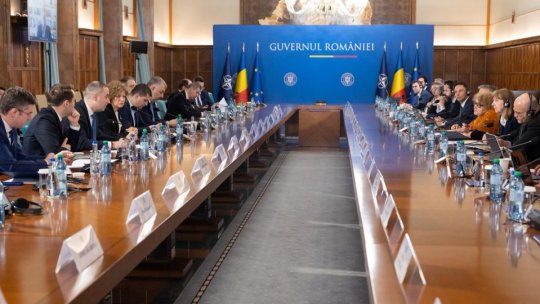
Ionut-Cristian Savoiu, Secretary of State in the Ministry of Transport, participated today in the Council of European Ministers of Transport.
"Romania plays a vital role in mobility on the eastern border and we must strengthen transport through solidarity routes, in order to ensure transport to Ukraine and Moldova. We thank and appreciate the position of the Danish presidency in terms of prioritizing European investments within the Connecting Europe Facility, because it helps Romania, which has a lot of projects to modernize the current infrastructure", says Ionut-Cristian Savoiu.
Also by the end of 2026, the European Commission will draw up a financing plan to cover the agreed projects.
The money would come from European instruments, through grants or structural funds, then from the European Investment Bank and from the national budgets of the three states.
Translated by: Radu Matei